Electronic bound book
The A&D record, kept the way an inspector reads it.
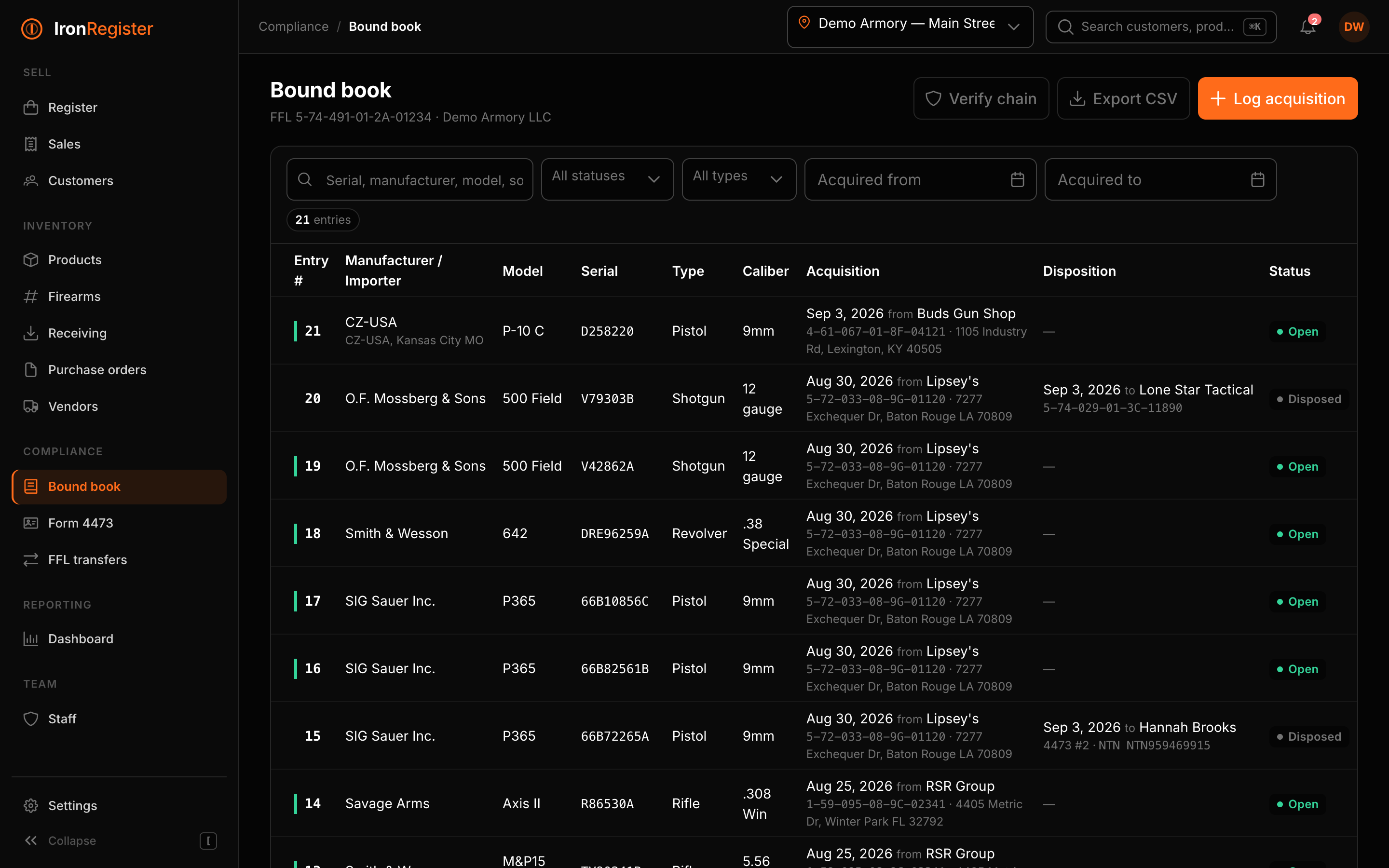
One book per licensed premises. One line per firearm, acquisition on the left, disposition on the right, in ATF column order. Underneath it, a tamper-evident log of every write — so “was this changed?” is a question the software answers, not you.
Every write is an event. Every event is chained.
Acquire, dispose, correct, void, note — each appends a record carrying a canonical snapshot of the line and a SHA-256 hash that includes the previous event’s hash. Recompute the chain from event one and any altered row shows up as the first break.
- Verify the whole book with one click before an inspection
- Entries are never deleted — voids stay numbered, with the reason
- Corrections keep the before and after on the event, with who and when
- Hash head printed on the export so the CSV can be tied back to the database
It fills itself in.
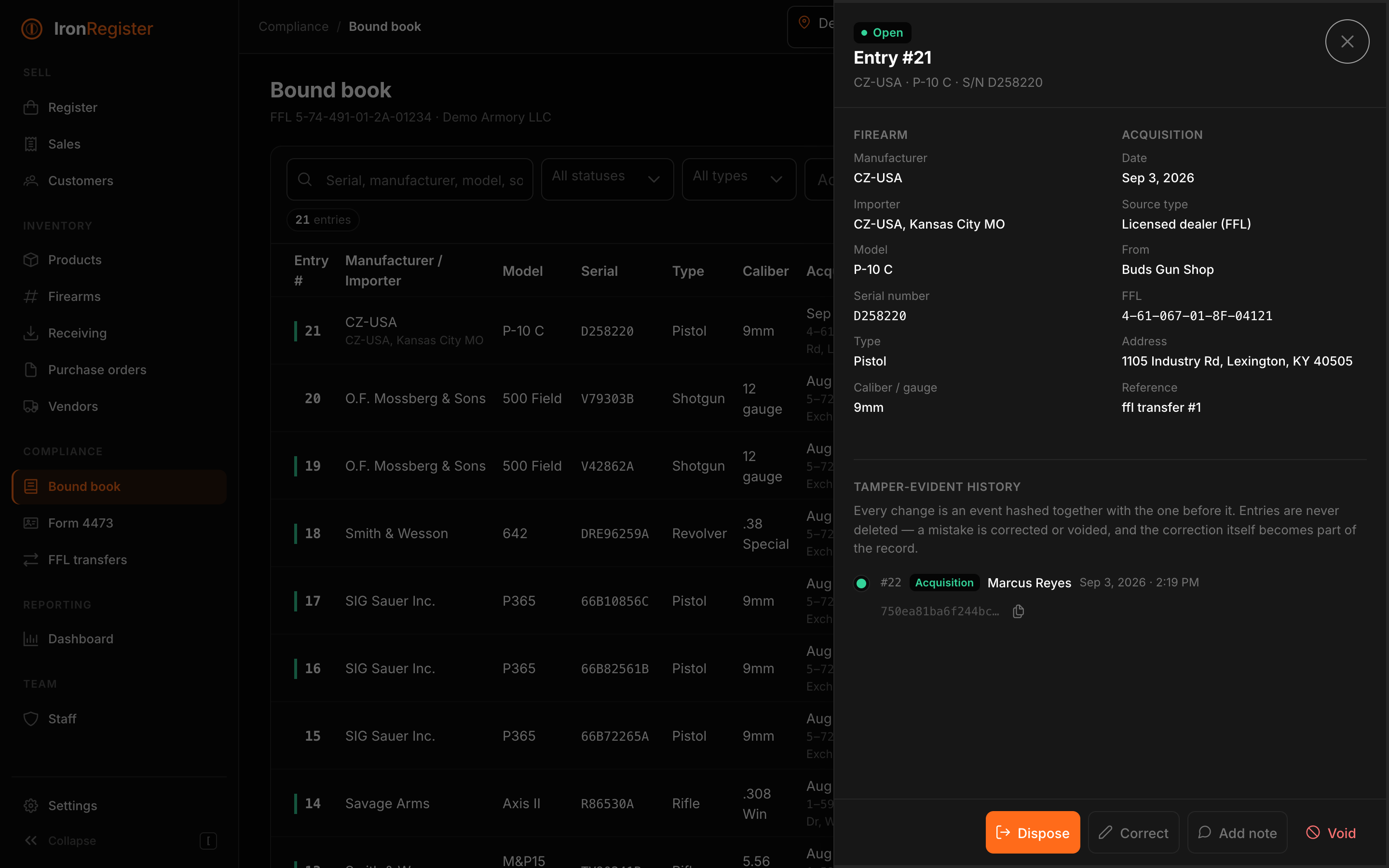
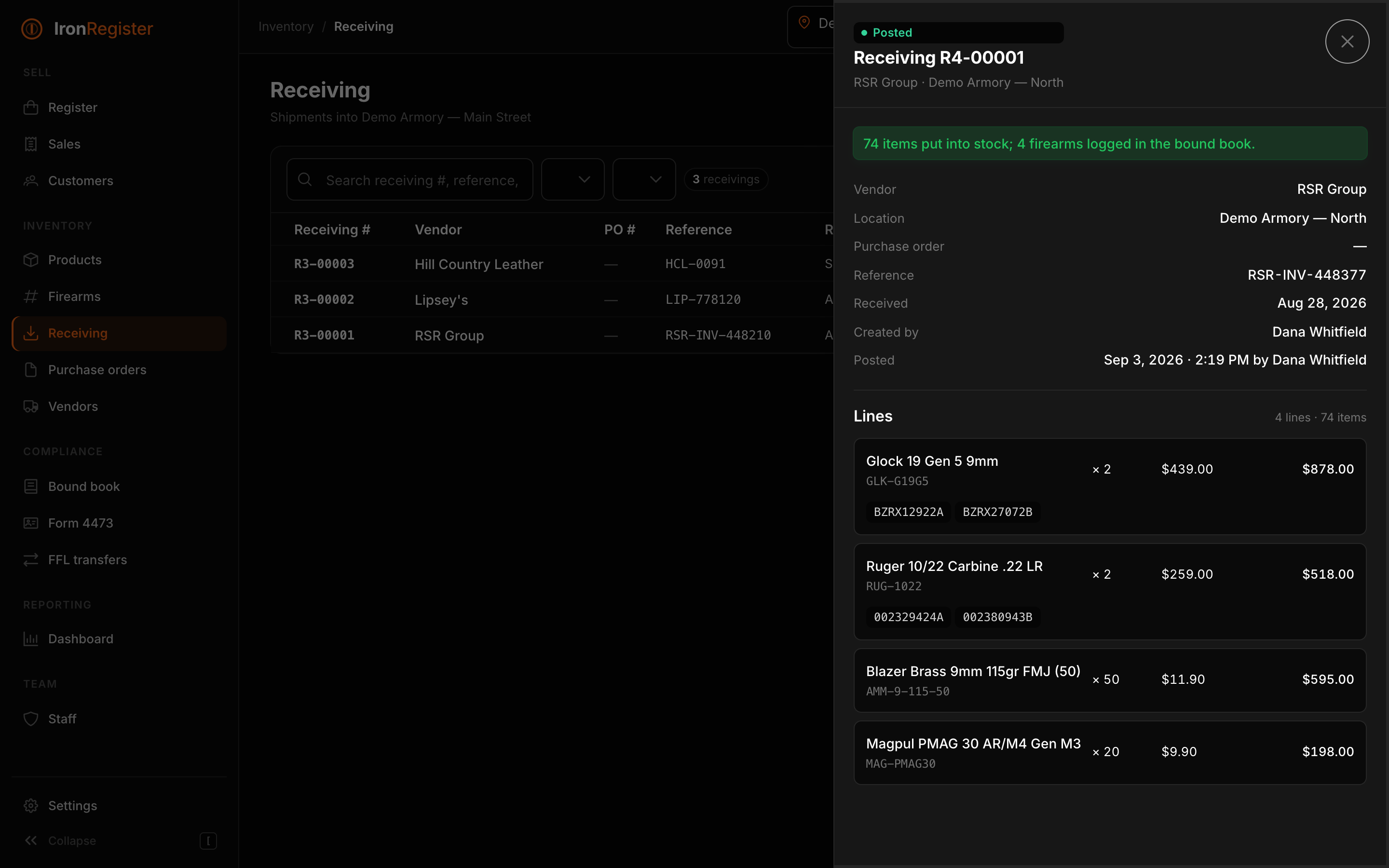
You don’t “go do the bound book”. Posting a receiving writes the acquisitions. Transferring a firearm on a proceed writes the disposition with the 4473 number and NTN. Shipping an outbound transfer writes the disposition to the receiving FFL. The manual entry screen exists for gunsmithing intake and the odd found gun.
- Receiving → acquisition from the vendor (name, FFL, address)
- Inbound transfer → acquisition from the shipping FFL; pickup → disposition to the customer
- Sale → disposition only after NICS proceed and a recorded signature
- Theft/loss and return-to-vendor dispositions from the firearm itself
The 4473 workstation.
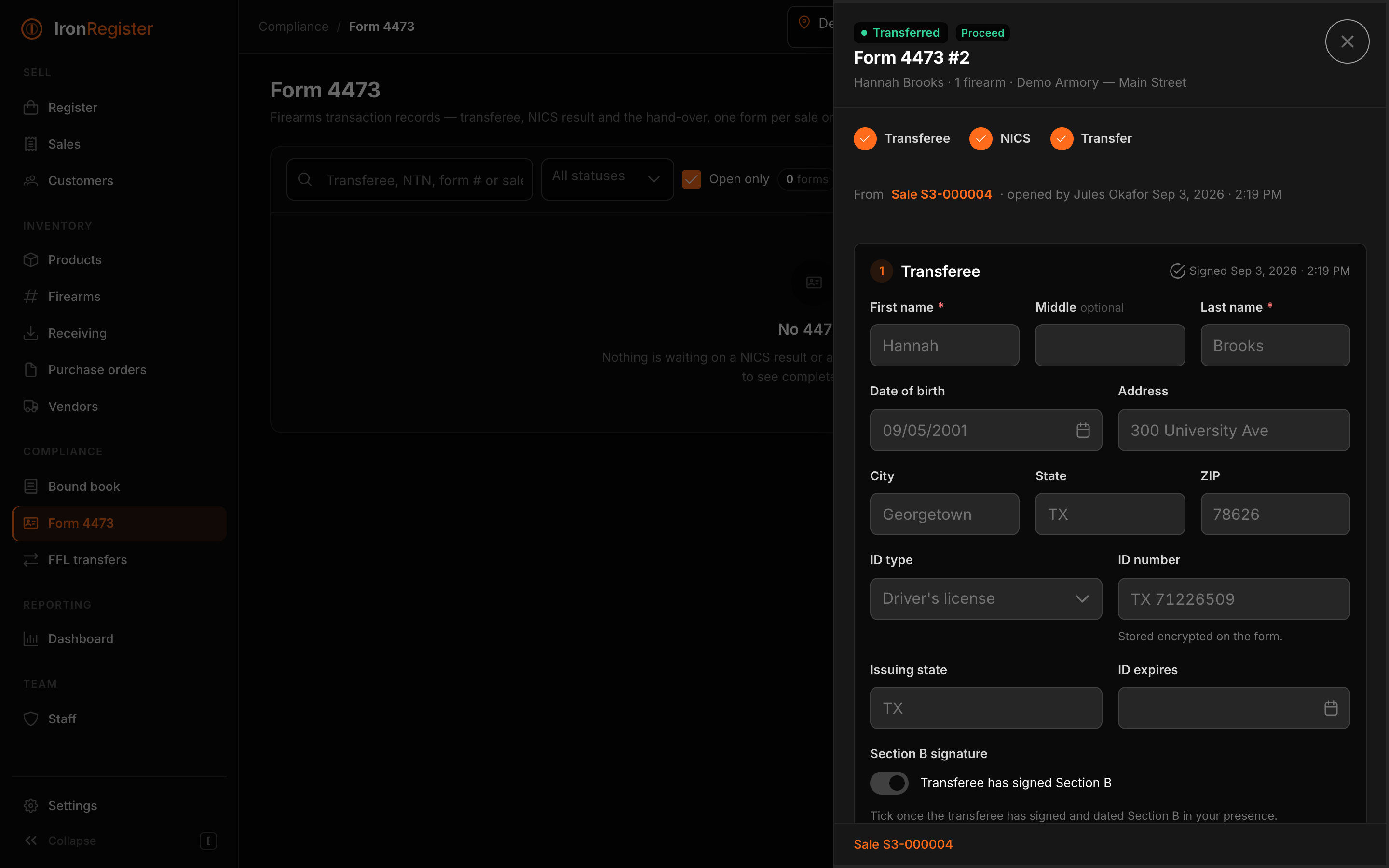
A sale with a firearm is paid first and waits. The form opens with the customer’s snapshot, staff run the check in FBI NICS E-Check or the state POC and record the answer with the transaction number, and the transfer button only lights up on a proceed with a signature on file.
- Transferee snapshot is encrypted at rest and shown only on demand
- Denied or cancelled forms release the reserved firearm back to stock
- Delayed forms surface in the attention feed with the date they can proceed
- Every view of a 4473 is itself logged
Straight answers
Does Iron Register run NICS checks?
No. You run them where you do today (E-Check or your state POC) and record the result. We deliberately keep the federal wire out of the product; recording, gating and the disposition are what we own.
Can I migrate my existing book?
Yes. Open entries import as acquisitions with their original dates and sources; the chain starts at the import so the history from that point forward is verifiable.
What about multiple stores?
Each location is its own FFL with its own book, entry numbering and 4473 numbering. A gun moving between your stores is a transfer between licensees, and it’s recorded as one.
Where is the data?
Scoped to your dealership alone, encrypted at rest, with 20-year retention baked into the schema — nothing in the compliance tables can be deleted through the application. Enterprise dealers run on a dedicated environment.
Iron Register records the information 27 CFR 478.121–125 requires and keeps it tamper-evident. Licensees remain responsible for their own compliance obligations.